Blog
How to Check Refrigerant Lines for Frost (Low Charge Sign)
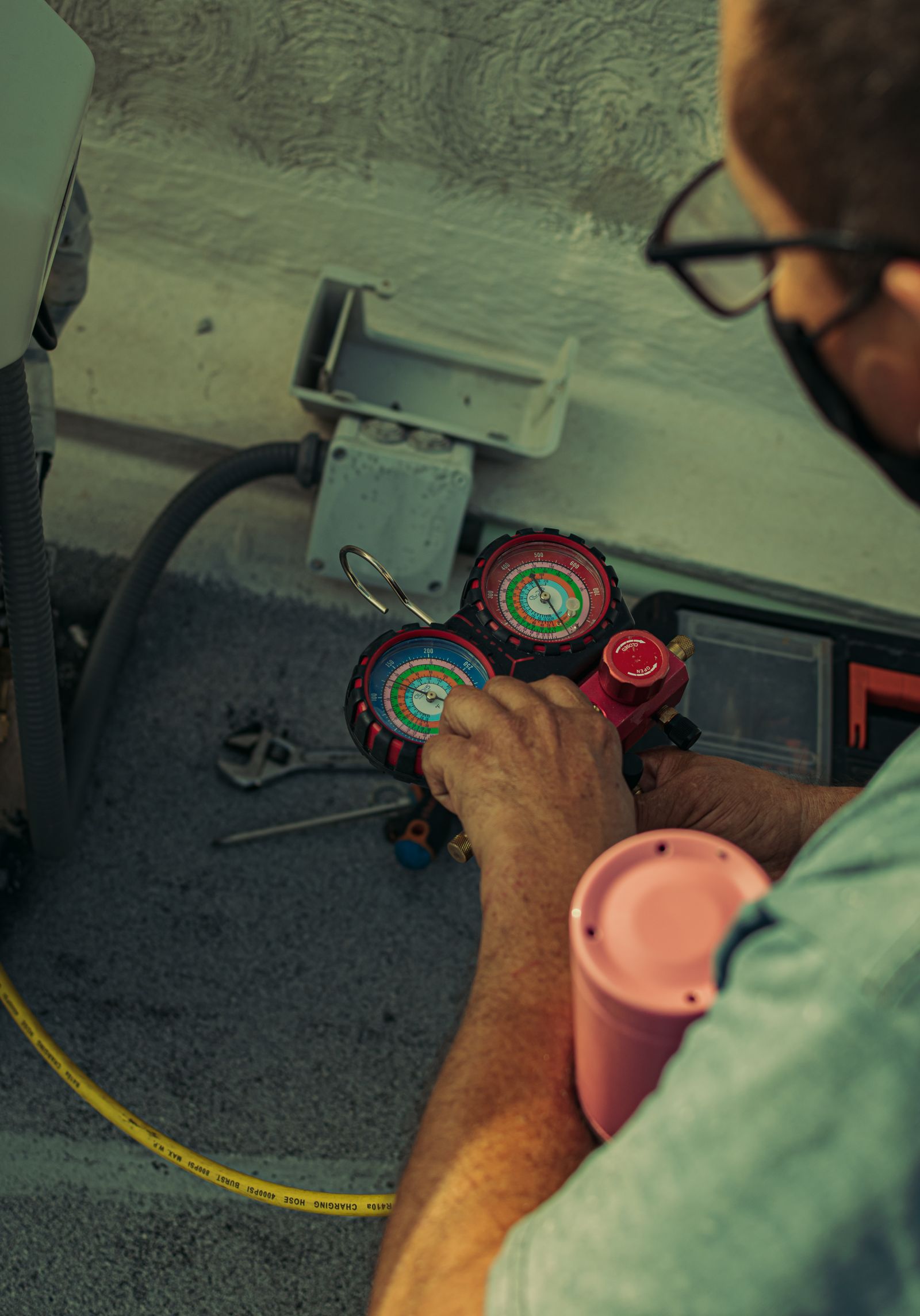 The afternoon sun beats down on the condo balconies along Biscayne Boulevard, and inside unit 402 the air handler runs nonstop without dropping the temperature below 80. You walk past the closet where the indoor unit lives and notice something odd — the thick copper pipe disappearing into the wall has a white crust creeping along its insulation, like a freezer burn creeping up a steak left too long in the deep freeze. That crust is frost, and in South Florida heat it is the classic first sign of a system starving for refrigerant — though airflow problems can fake the same sign, which is why the order of the checks below matters.
Frost on the larger suction line (the cold one) usually signals a low refrigerant charge. When refrigerant runs low, pressure drops in the evaporator coil, the coil gets colder than 32°F, and humidity from the air freezes on the pipe surface. A thin layer of frost near the evaporator is the most common visible sign of low charge.
What does frost on the lines actually mean?
Your air conditioner moves heat by cycling refrigerant through two copper lines. The smaller liquid line carries high-pressure liquid refrigerant to the indoor coil. The larger suction line carries low-pressure vapor back to the compressor outside. In normal operation the suction line stays cool — around 45 to 55 degrees — but never cold enough to freeze water out of the air. When refrigerant charge drops, pressure in the evaporator falls below the saturation point for 32°F. The coil surface drops below freezing. Moisture in the passing air turns to ice on the coil fins and travels down the suction line insulation. That white fuzz you see is the first clue the system is running on fumes.Which line should you check first?
Look at the larger pipe — the one wrapped in black foam insulation. That is the suction line. Peel back a foot of insulation near the indoor unit where the pipe enters the coil cabinet. If you see white crystalline frost clinging to the copper or the insulation itself feels stiff and cold, you have confirmed the low-charge pattern. The smaller liquid line should feel room temperature or slightly warm. If both lines are frosted, the problem is likely airflow (dirty filter, blocked return) rather than charge. That distinction matters because adding refrigerant to an airflow-starved system can flood the compressor and kill it.Why does low charge cause freezing?
Think of refrigerant like water in a garden hose. When the hose is full, pressure pushes water through the nozzle in a steady stream. Pinch the hose — less water, less pressure, the stream weakens. In your AC, the "nozzle" is the metering device that sprays refrigerant into the evaporator coil. Low charge means less liquid reaches the nozzle. The spray becomes a mist. Pressure inside the coil drops. Temperature follows pressure — basic physics. Once the coil surface hits 32°F, any humidity touching it turns to ice. The ice builds, blocks airflow, and the coil gets even colder. It becomes a runaway freeze-up that stops cooling entirely.How to safely look at your lines
Turn the thermostat to OFF. Wait ten minutes. The ice will melt and drip into the drain pan — normal. Use a flashlight. Pull back the insulation gently; it tears easily. Look for frost on the bare copper. Feel the pipe with the back of your hand. A properly charged suction line feels cool like a glass of iced tea. A low-charge line feels like a freezer pack. Do not chip ice off with a screwdriver. Copper is soft. A nick becomes a leak, and now you have two problems. Do not pour hot water on the lines. Thermal shock can crack the copper or the coil connections. Let it melt on its own.What else can cause frost besides low charge?
A clogged filter chokes airflow across the coil. Less warm air means the coil drops below freezing even with correct charge. Check the filter first — it takes thirty seconds. A dirty evaporator coil acts like a blanket, same result. Closed supply vents in unused rooms raise static pressure and reduce airflow. A failing blower motor or a capacitor on its way out slows the fan. All of these mimic low-charge frost. The difference: with airflow issues the frost usually starts at the coil and spreads outward. With low charge the frost may show up first on the suction line several feet from the coil, because the refrigerant is already boiling off too early. The video — "Are Your A/C Lines Frozen? Check This First!" from The DIY HVAC Guy — starts exactly where this post does: frozen A/C lines, and the first check to make before you assume the worst. It is a homeowner-teaching walkthrough of a frozen-line call, not a sales pitch, and his channel carries the same warning this post ends on: anyone who actually handles refrigerant must hold an EPA 608 certificate, which is why the visual check is the homeowner's job and the recharge is not. Watch it for the order of operations — confirm the frost, check the simple airflow causes first, and only then treat low charge as the diagnosis. That sequence is what keeps you from paying for refrigerant your system will leak right back out.When to call us
If you confirm frost on the suction line and the filter is clean, the system is low on refrigerant. Refrigerant does not get used up — it leaks. Finding and repairing the leak requires nitrogen pressure testing, electronic leak detection, and EPA-certified recovery equipment. That is not a DIY job. Call Aventura HVAC Maintenance at (786) 664-2155. We serve Aventura and nearby communities Monday through Saturday, 8 AM to 8 PM. We will locate the leak, repair it, pull a proper vacuum, and recharge to the exact manufacturer weight — not by guess, not by pressure alone. That is the version of the repair that holds: a recharge without a leak fix just buys a few weeks of cold air before the frost comes back.Need a professional touch?
Straightforward HVAC service with flat, honest pricing — quoted before any work begins.
No review discounts · no upsells.